Less wait, what? More oh, nice?
I spent around 4 years at IBM and Software AG designing and writing content for webMethods, the software engineers use to run their APIs and integrations. I also contributed to the IBM Carbon design system. These days I design agent experiences: the screens where a person decides how much to trust a machine.
into content
design
Agent products are good at showing you what already happened. They are bad at showing you what is about to happen. That gap is the whole job, and it is where I design.
The hard part of agent UX is not the conversation. It is the handover: the moment a person stops doing the work and starts supervising it. I design the gates in between, where someone sees the plan before it runs, reads the exact payload before approving it, sets what a task is allowed to touch, and gets their work back when a run fails.
starts with a human gate.(and then
the happy path.)
Five projects,start to finish.
Three on AI and agent oversight, two on high-stakes products. Each one has a decision in it I would defend in a review. Open any card for the full story.
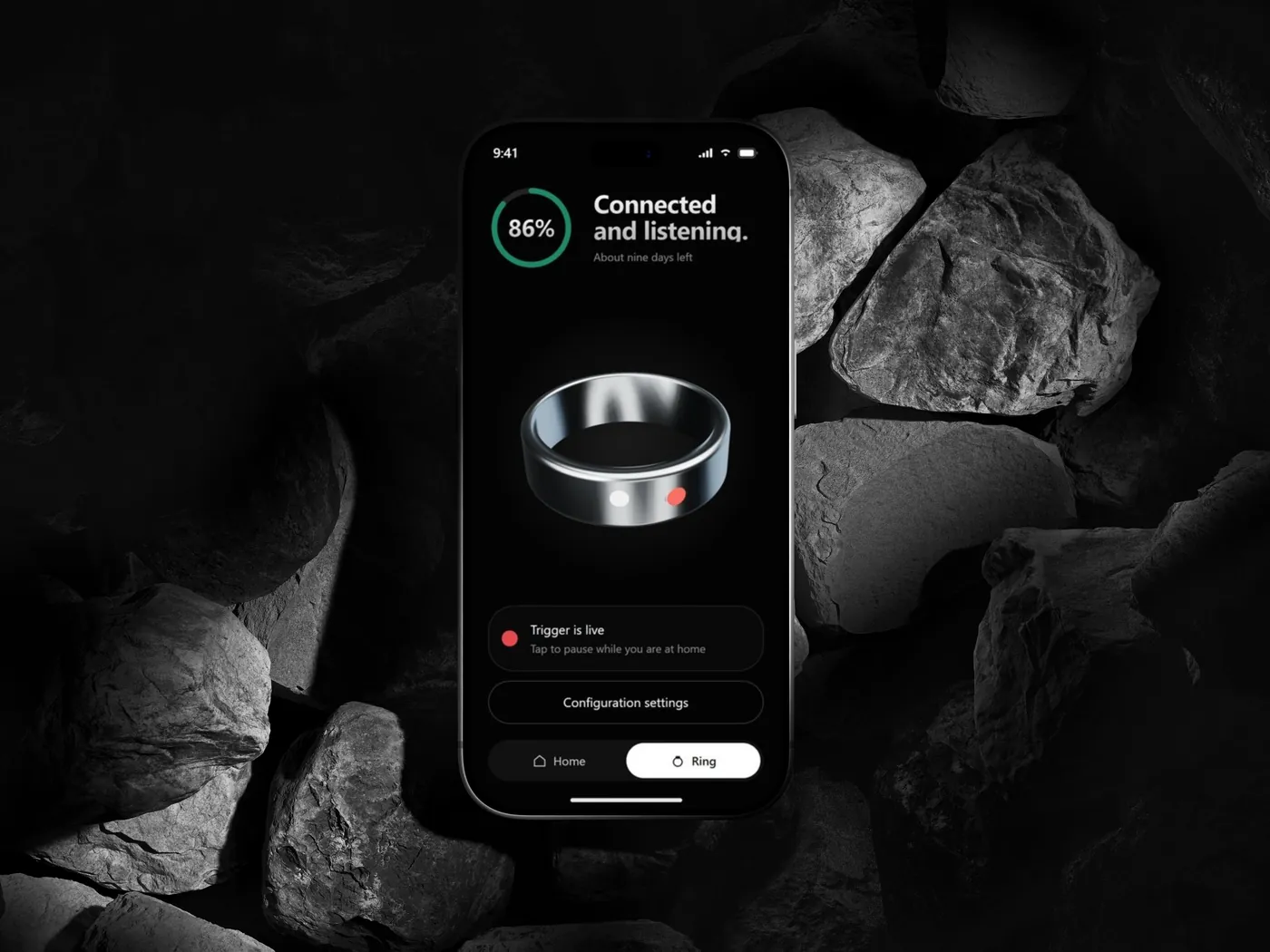
HalO
HalO is a discreet safety ring and companion app concept for women commuting alone in urban and rural India.
Reframe
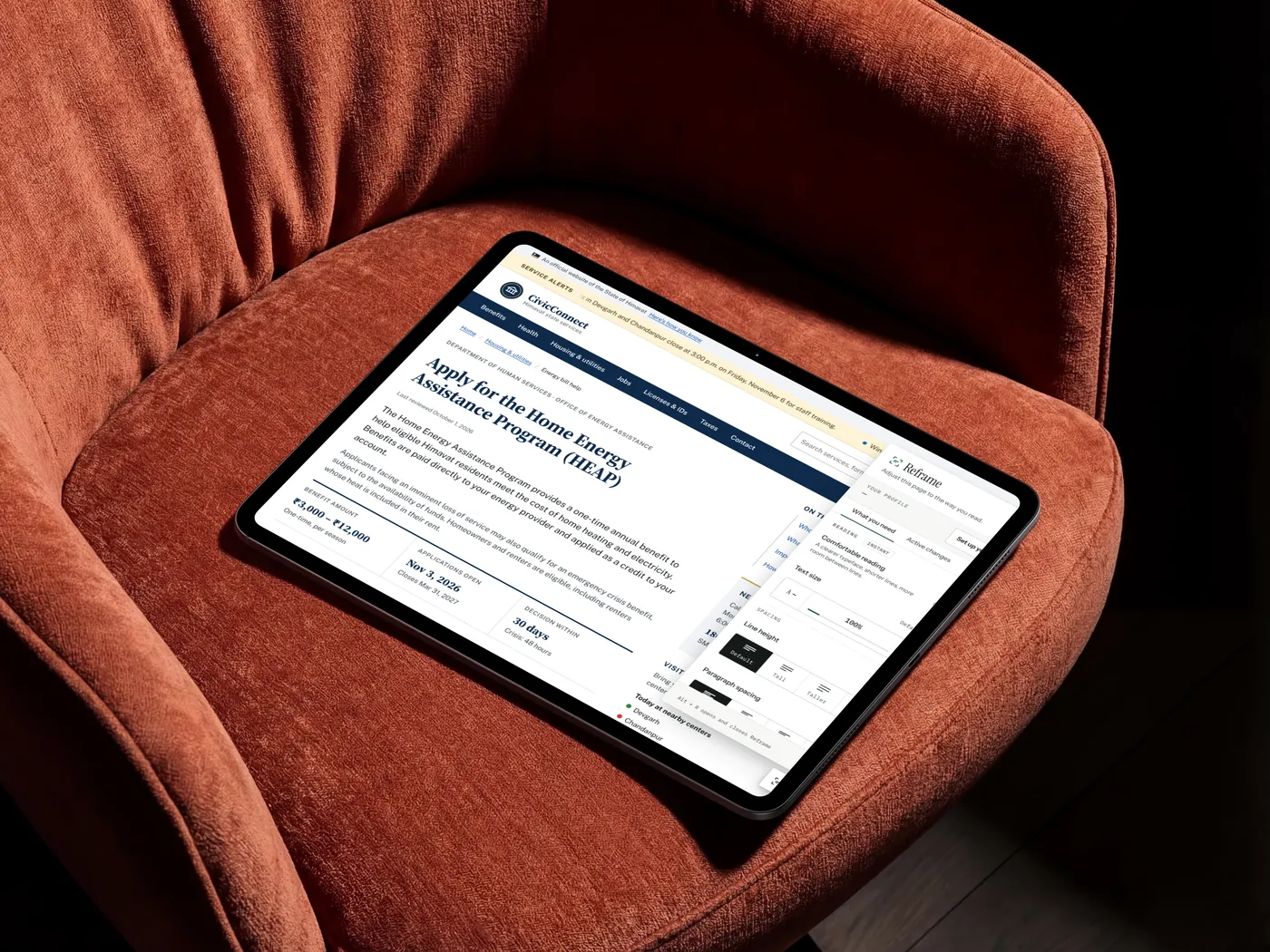
I designed and built Reframe, a reading layer for existing websites. It lets people adjust how a page looks and reads, review suggested changes to the wording, and get back to the published version.
Steer
Steer gives supervisors a view of the whole school and instructors a clear view of the next lesson. Both work from the same records.

ATLAS
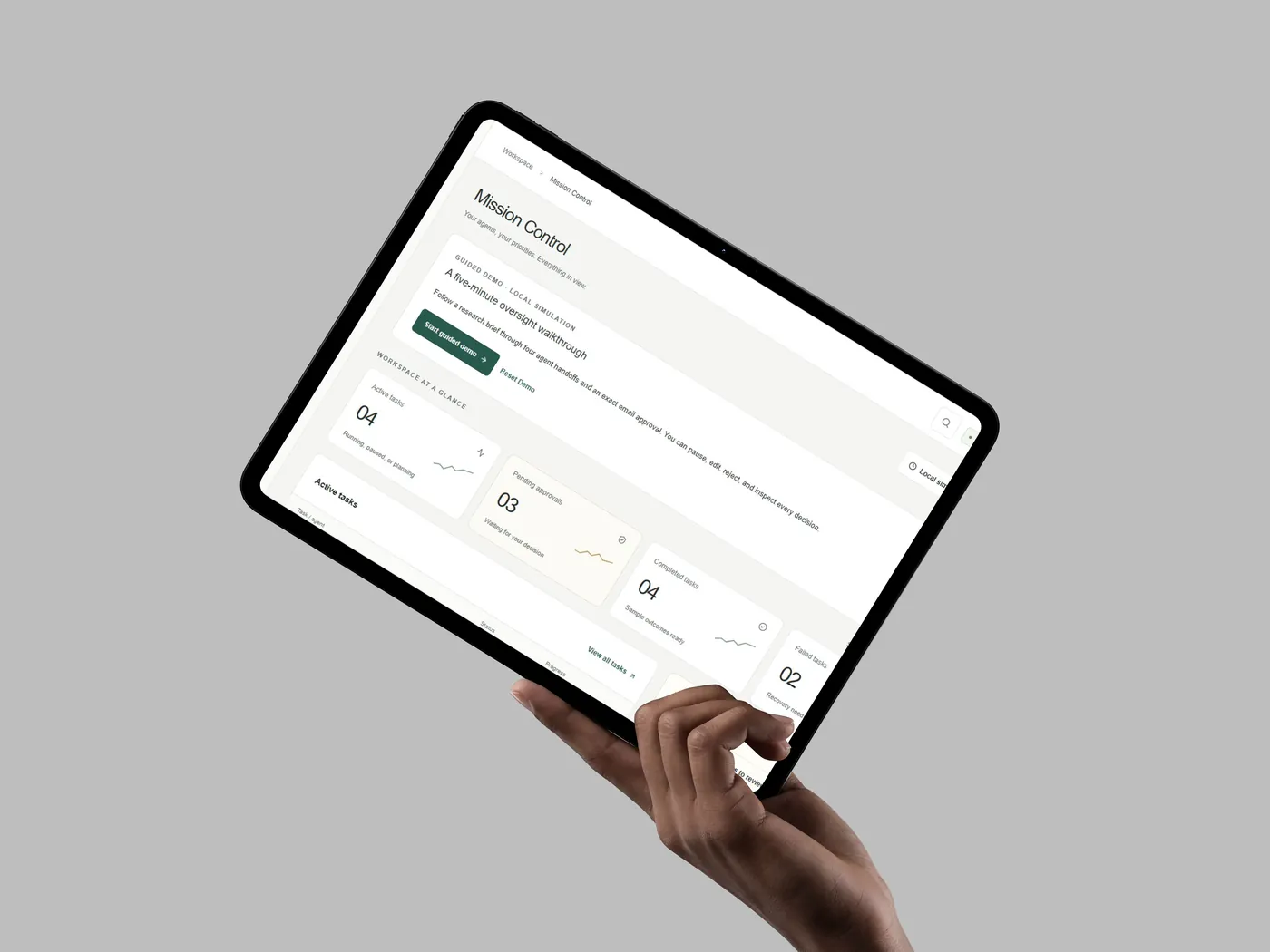
ATLAS is a control center for supervising AI agent work to inspect the plan, review consequential actions, and recover useful work when execution stops.
Lineage
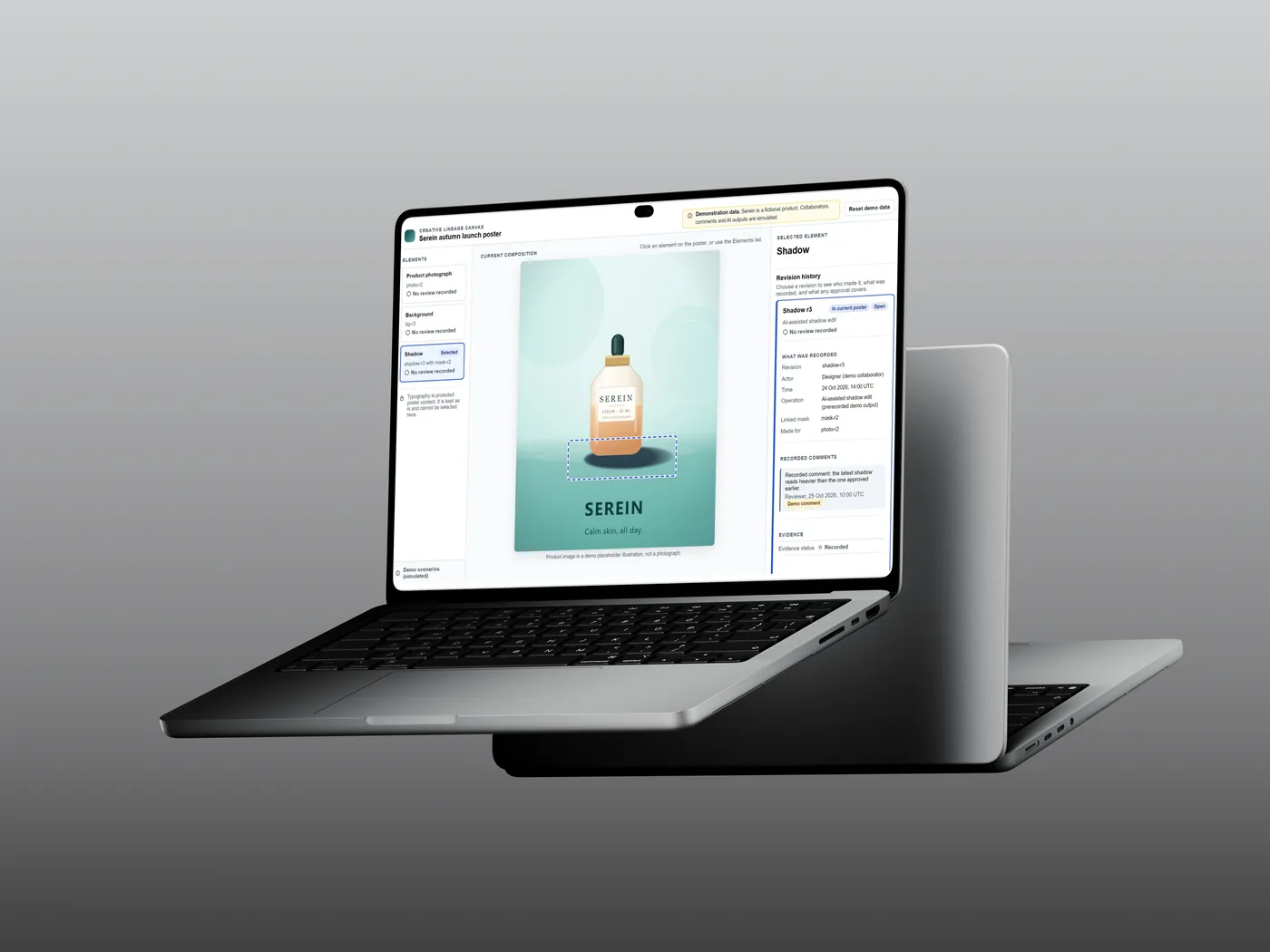
Creative Lineage Canvas helps a designer bring back an earlier approved element while keeping the rest of the poster as it is today.
I make complex productsmake sense.
I started as a technical writer at Software AG, documenting API products for engineers with no patience for filler, then moved into the product as a UX writer and content designer. After the merger with IBM, I worked on webMethods API Gateway and the IBM integration platform. That is around four years of UX writing, technical documentation and content strategy, a contribution to the Carbon Design System, and the systems (guidelines, audits, IA models, terminology standards) that make quality the norm.
- 400+pages
Documentation restructured and remediated across two merged webMethods libraries.
- 45+terms
Entries in the terminology and inclusive-language standard I wrote and own.
- 28person team
Writers and designers working to that standard, enforced by templates rather than reminders.
- 10+teams
Product writing teams across the webMethods suite that adopted the task-based IA model I built.
Configure the master node to push changes to all slave nodes.
Configure the primary node to push changes to all replica nodes.
Industry-standard replacements, chosen because they are also more accurate. This became one of 45+ entries in the terminology table, so writers stopped deciding case by case.
- CD/01UX writing
Interface and instructional copy: onboarding, procedures, labels, empty states, error messages.
- CD/02Information architecture
Audits, taxonomy, navigation models and task-based structures for dense product suites.
- CD/03Content strategy
End-to-end ownership from audit to rollout, with principles stakeholders can apply without me.
- CD/04Accessibility
Alt text, ARIA labelling conventions, colour and icon standards, plain language, WCAG 2.1 AA.
- CD/05Inclusive language
Terminology audits and replacements at scale, baked into templates and style guidance.
- CD/06Content systems & governance
Guidelines, terminology standards and contribution models that hold after the project ends.
- CD/07Visual storytelling
Comics, diagrams and figures used as explanation, with comprehension as the success measure.
- CD/08AI-assisted workflows
Audits, sweeps and variant generation at volume, with human judgement on every call.
- CD/09Developer experience
API Gateway and Control Plane content for engineers, architects and admins who distrust a fourth tool.
Three case studies,told in full.
Each one opens on its own page with the complete write-up and the original screenshots. Two of them also link to the full PDF.
- 01Software AG → IBM · Accessibility
Building an accessibility and inclusive content system for webMethods documentation
Fix the language in existing text first, then build alt text, colour, icon and ARIA conventions into how new visuals get made, so accessibility stopped being a page-by-page judgement call and became the default.
Read the case studyGuideline PDF inside - 02Software AG → IBM · Information architecture
Documentation restructure post-merger: rebuilding information architecture for scannability
A full content audit across 400+ pages, a short set of IA principles the team could apply without me, then a rebuild organised around user tasks instead of legacy product boundaries, shipped without pausing active documentation work.
Read the case study - 03IBM API Control Plane · Onboarding
Explaining an invisible product with a 15-panel comic
The old intro was an architecture diagram. I replaced it with a 15-panel comic: three personas, engineer, PM and architect, each getting a named payoff in the final panel, in fewer words than the onboarding page it fronts.
Read the case studyFull comic PDF inside
The actual toolkit
What I makewhen nobody's briefing me.
Plot twistI started as an engineer.
I trained in electronics and communication, then worked out that I cared more about the people using the technology than the circuits inside it. Software AG (now IBM) hired me as a content designer, and I spent four years making API gateways and integration runtimes make sense to humans. Then AI showed up and I fell hard. Now I design AI that explains itself, so it works for everyone and not only the people who already speak tech.
- Engineering degrees, still useful
- 1
- Years making software speak human
- 4
- Years as a classical dancer
- 17+
- College photography teams led
- 1
Art and illustration
i can stare at one thing for hours. turns out that helps in design reviews too.
Posters and side design
one client, no deadline, no tickets. still somehow the hardest brief i get.
Photography
most of it is deciding what to leave out of the frame. so is a settings page.
Bharatanatyam
years of counting beats and turning up to practice when nobody is watching.
Event management
lots of people, one fixed date, no second take. a product launch with better snacks.
UI experiments
small things i rebuild to see how they actually work. this site is one of them.
Sketchbook pages
everything starts here. usually badly, usually in pencil.
Got somethinghard to design?
Agent oversight, AI explainability, accessibility or a complex enterprise product. Those are my favourite kind of problem. Tell me what you are building and I will tell you how I would approach it. I usually reply within two working days.